

We joined leaders from across Canada this week at the first-ever Sustainable Workforce Summit, which brought together employers, educators, governments, Indigenous communities, and labour organizations to address one of Canada’s most pressing economic challenges: building the skilled workforce needed to power a green, resilient economy.
The sessions were grounded and wide-ranging. Luisa Da Silva of Iron & Earth spoke to the work of supporting fossil fuel workers as they move into new careers — a transition that demands both practical pathways and genuine respect for workers’ existing skills. Economist Jim Stanford of the Centre for Future Work and the Canadian Centre for Policy Alternatives offered a clear-eyed look at where fossil fuel sector jobs in Canada stand today, and what the data tells us about the scale of change ahead. And Jasmeen Sidhu of CEWIL Canada brought something less expected: a deep dive into the neuroscience of change, and what it actually takes to build teams that can adapt and perform through uncertainty.
The Summit’s format went beyond traditional conference panels, featuring facilitated matchmaking sessions, hands-on workshops, and solution-oriented discussions aimed at producing concrete partnerships and measurable commitments.
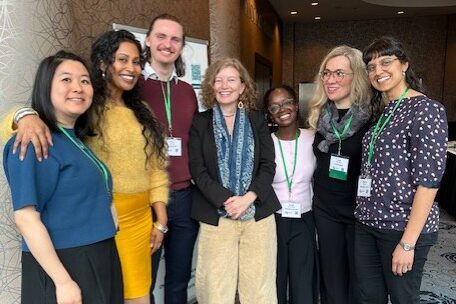
We came away struck by the depth of energy and expertise across the country being directed toward sustaining, creating, and improving opportunity in sustainable trades — for both existing workers and those newly entering the workforce. The event also provided a valuable opportunity to connect with BC-based partners working on these shared goals.
The Summit was founded by CIET Canada, a training and capacity-building institute focused on energy transition and decarbonization, and supported by partners including Efficiency Canada, the Future Skills Centre, and the Pembina Institute, among others.
We’re glad to have been part of the conversation and look forward to continuing to work with the people and organizations helping shape Canada’s sustainable workforce.