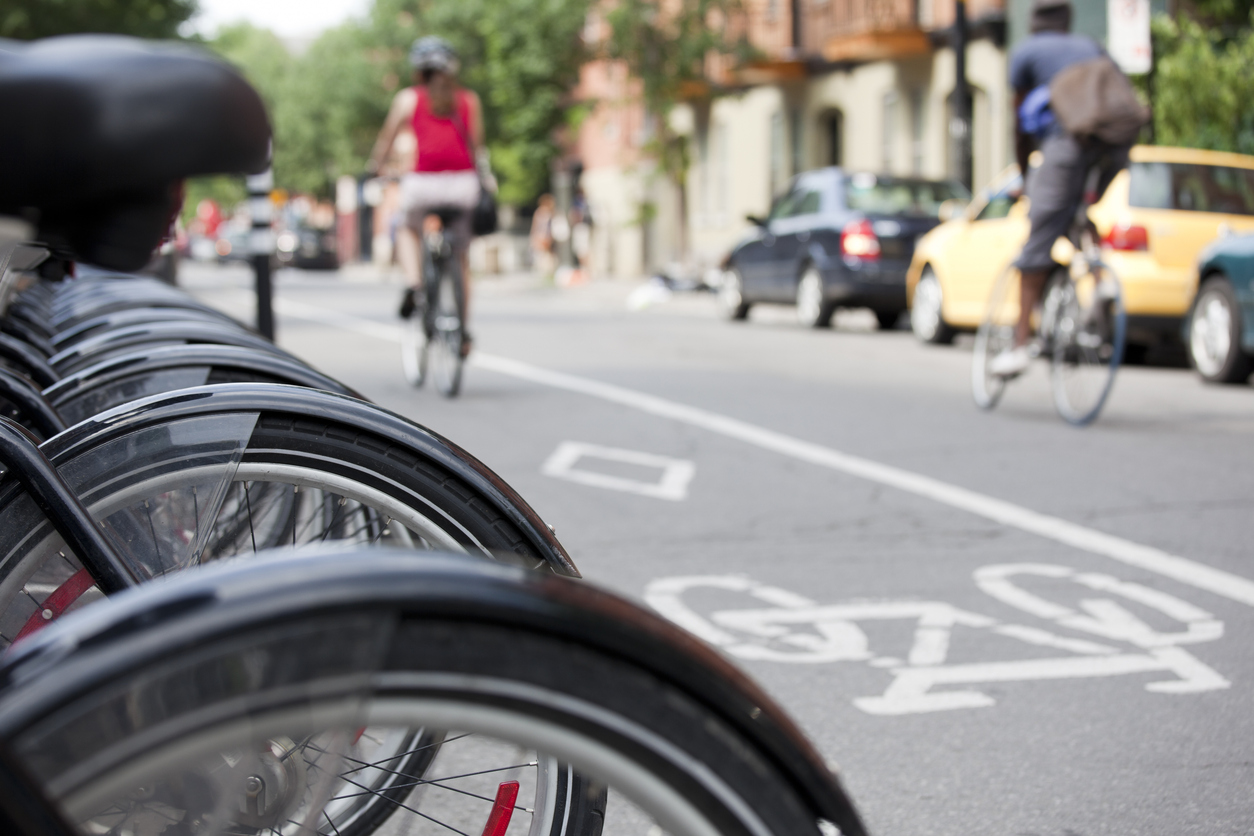

A city works best when people have good quality options for how they get around.
Bike share is an easy, efficient, reliable and affordable mobility option. It’s a network of bikes available for short-term rentals 24/7 in convenient locations. These bikes can help residents get to work, school, shopping, events, and more. Bike share can play a key role in making it faster and easier to connect to rapid transit stations. And it has become a proven solution in similar cities.
EnviroCentre knows there is interest and support for bike share in the region. We built on that support and brought key partners together to explore how to get bike share rolling. The results are now available in the Ottawa-Gatineau Bike Share Feasibility Study.
A new approach
Ottawa and Gatineau tried bike share before, but never reached the scale required to serve residents. Previous attempts were too small, too focused on tourism, and lacked the public support that makes bike share thrive in other places. This time, the approach is different. EnviroCentre brought together the City of Ottawa, Ville de Gatineau, the National Capital Commission (NCC), MOBIO and the Ottawa Climate Action Fund to do this right — with rigorous research, peer city benchmarking, and a commitment to building something that lasts.
Mobycon, global mobility consultants with North American headquarters in Ottawa led the study. It draws on data from BIXI Montréal, Bike Share Toronto, Hamilton Bike Share, and other successful systems across North America.
Key findings
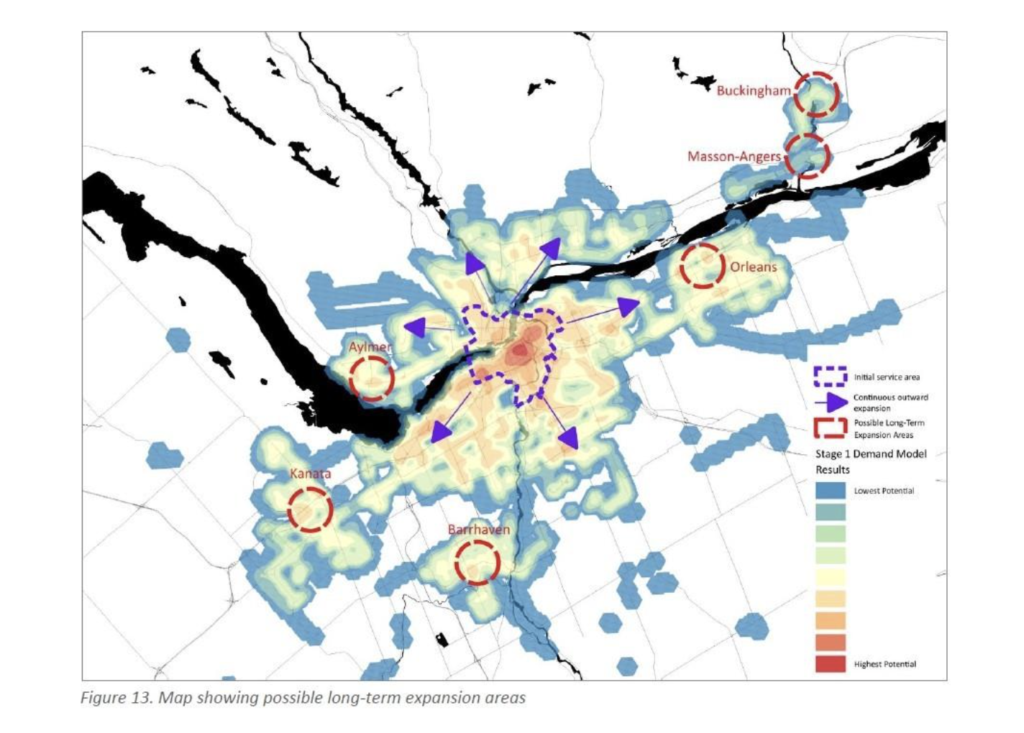
The study recommends launching a system of 1,200 bikes across 115 stations, covering a 30 km² service area that spans both sides of the river. In this scenario, Ottawa would have 900 bikes and 90 stations; Gatineau, 300 bikes and 25 stations. The initial service area reaches where people live, work, and travel — including four universities, 16 rapid transit stations, and 5/6 interprovincial bridges. The initial area is suggested as a strong starting point, but the study recommends expansion planning by year 1-3 and a long-term vision to reach more communities.
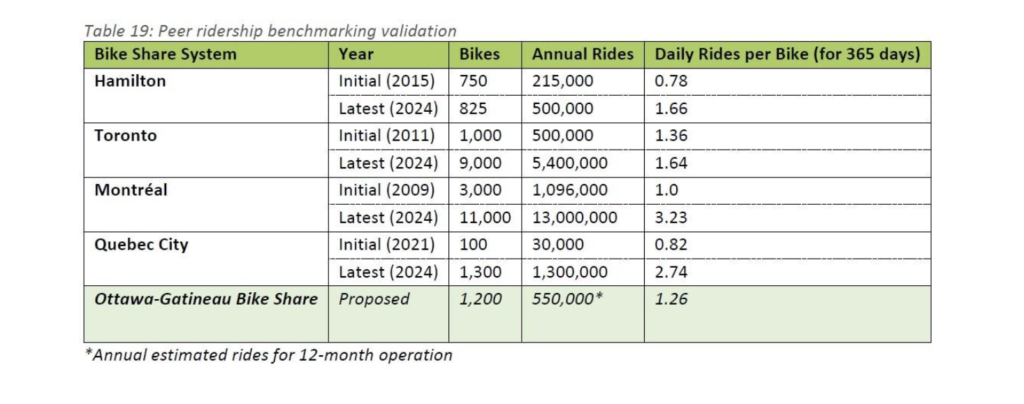
The study looks at ridership and costs over the first five years of operation to give a new system time to establish itself. Two launch scenarios were evaluated: a fully non-electric fleet, and one with 20% e-bikes. Both scenarios project annual ridership of more than 450,000 trips once the system matures. The estimated cost for five years is between $18.6 and $21 million — competitive with peer cities and a fraction of what we invest in roads (Ottawa spends $12.6 million each year repairing potholes!). The bike share system would also gain revenue from user fees, grants, and sponsorship.
Supporting all modes of transportation
Here’s the thing about bike share that often surprises people: it’s not really about bikes. It’s about making the whole transportation network work better.
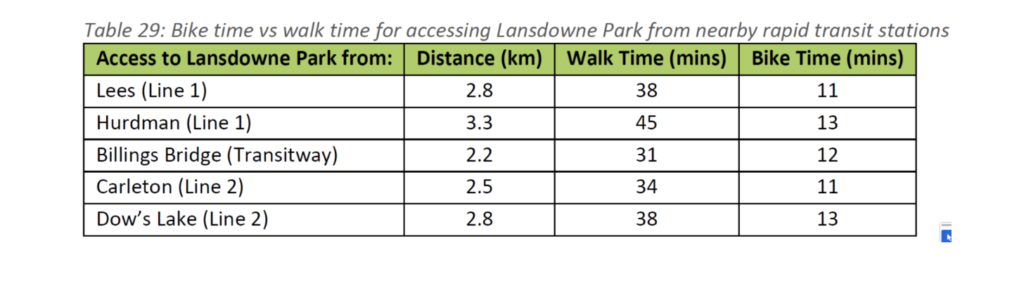
Across North America, nearly three-quarters of bike share users ride to connect with transit. Think of it as the “missing link” between the O-Train or Rapibus station and your starting point or final destination. Many stations have destinations nearby, but a long walk or wait for a bus transfer. For example, a suburban commuter could ride the O-Train to Hurdman and bike the last 2.6 km to a nearby office in 10 minutes, instead of waiting for a local bus. Multiply that across thousands of daily trips, and bike share becomes a powerful tool for reducing traffic congestion and carbon emissions while making public transit more useful for more people.
The study estimates the system could eliminate over 470,000 kilometres of driving annually. This would reduce greenhouse gas emissions by more than 1,100 tonnes of CO₂ per year. Taking cars off the road reduces congestion, improving transportation for those who cannot or do not want to use bike share. It’s a win-win.
Built for everyone
One of the most important aspects of the study is its equity focus. Bike share isn’t just for downtown professionals – it’s for students, shift workers, people who can’t afford a car or a personal e-bike, and anyone who needs a reliable, affordable way to get around. The proposed service area prioritizes equity-deserving neighbourhoods, and the plan calls for subsidized memberships, multiple payment options, and accessible bike options.
This is also good news for Ottawa’s and Gatineau’s downtowns, which both mayors have identified as priorities for revitalization. Bike share connects people to local businesses, major events, and destinations like Lansdowne Park, ByWard Market, and spots along the NCC pathways like the Dow’s Lake Dock.
The immediate next steps identified in the study are for Ottawa, Gatineau, and the NCC to agree on a governance model, secure capital and operating budgets, and streamline station permitting. Sponsorship opportunities and provincial and federal grant programs can help offset costs.
EnviroCentre’s work in bringing this study to life reflects a simple but powerful belief: sustainable transportation isn’t a luxury, it’s infrastructure. Bike share is a missing piece of our regional network, and the time to act is now.
The full Ottawa-Gatineau Bike Share Feasibility Study is available:
Read the full Ottawa-Gatineau Bike Share Feasibility Study