

The BOMA BEST certification for commercial buildings signals to tenants, investors, and the market that a building is being managed responsibly. But for commercial property managers already in the BOMA BEST programme, the question usually isn’t whether to certify. It’s how to move up.
BOMA BEST is Canada’s leading certification programme for the environmental performance and management of existing commercial buildings. BEST stands for Building Environmental Standards, and buildings are scored across six focus areas — energy, water, waste, emissions, indoor environment, and health and safety — and earn certification at one of four levels: Bronze, Silver, Gold, or Platinum.
That gap between certification levels can feel frustratingly abstract — a points problem without an obvious solution. But in my experience working with Ottawa office buildings, the answer is often sitting in the waste room.
Waste is one of six scored focus areas in the BOMA BEST Sustainable Buildings Certification, and it’s one of the most actionable. For office buildings, the programme awards up to 56 waste-related points out of a total of 395. A building at 300 points — Silver certification — needs just 13 more to reach Gold. For many buildings, those points are within reach through waste management improvements alone.
The challenge is that waste rarely gets treated as a strategic priority. It gets managed, but not optimised. And the results show up in audits: low diversion rates, high contamination, recyclable and compostable material going straight to landfill. That’s discouraging on the surface. But it also means the potential for improvement is real, and the gains can be measured quickly.
Infrastructure first, engagement second
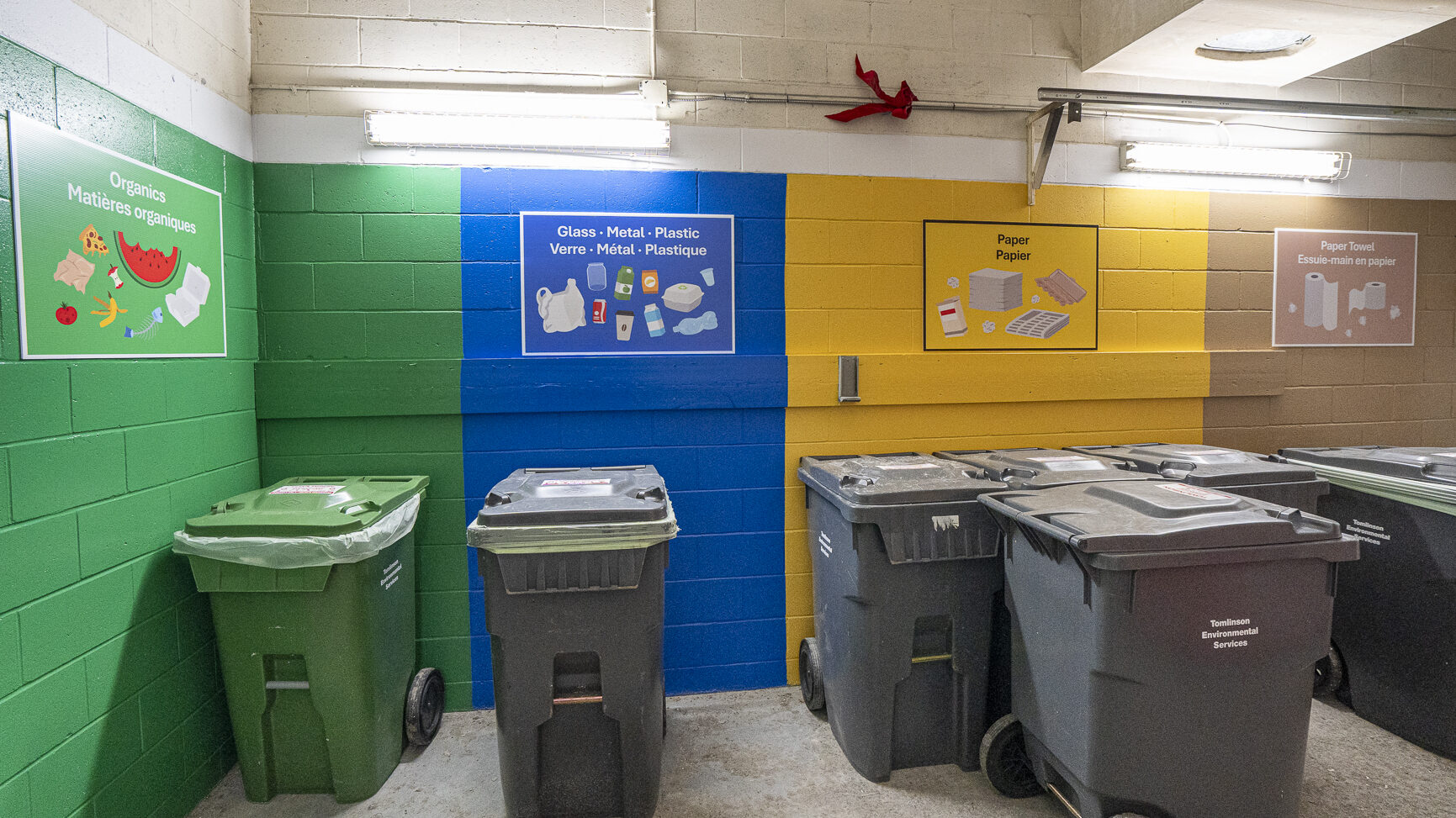
The most common mistake I see is jumping to tenant communications before the physical environment is ready. No amount of outreach can compensate for a waste room that makes sorting difficult or bins placed where they inevitably become catch-alls for unsorted waste.
Getting the infrastructure right doesn’t have to mean significant capital expenditure. Painted zones, clear signage, and grouped sorting stations rather than isolated bins in high-traffic corridors — these are low-cost changes that make a genuine difference in how people sort.
Once the environment supports the right behaviour, engagement can do its job. That means tailored communications and training for two distinct audiences: office tenants and custodial staff. Their roles in the waste stream differ, and the way you reach them should, too.
Turning a diagnostic into a plan
At EnviroCentre, our starting point is always a thorough diagnostic — analysing waste audit data and hauling records, assessing infrastructure, and talking to the people who interact with the waste system every day. That work surfaces what’s actually standing between a building and better performance, and shapes an action plan with clear priorities, costs, and timelines.
For property managers trying to close the gap to the next certification level, waste is a practical place to focus. The points are there. The barriers are usually solvable. And the improvements tend to compound — better diversion means lower hauling costs, cleaner operations, and a stronger story to tell tenants and investors.
EnviroCentre provides waste management support for commercial buildings, from infrastructure assessments to tenant engagement and BOMA BEST alignment.