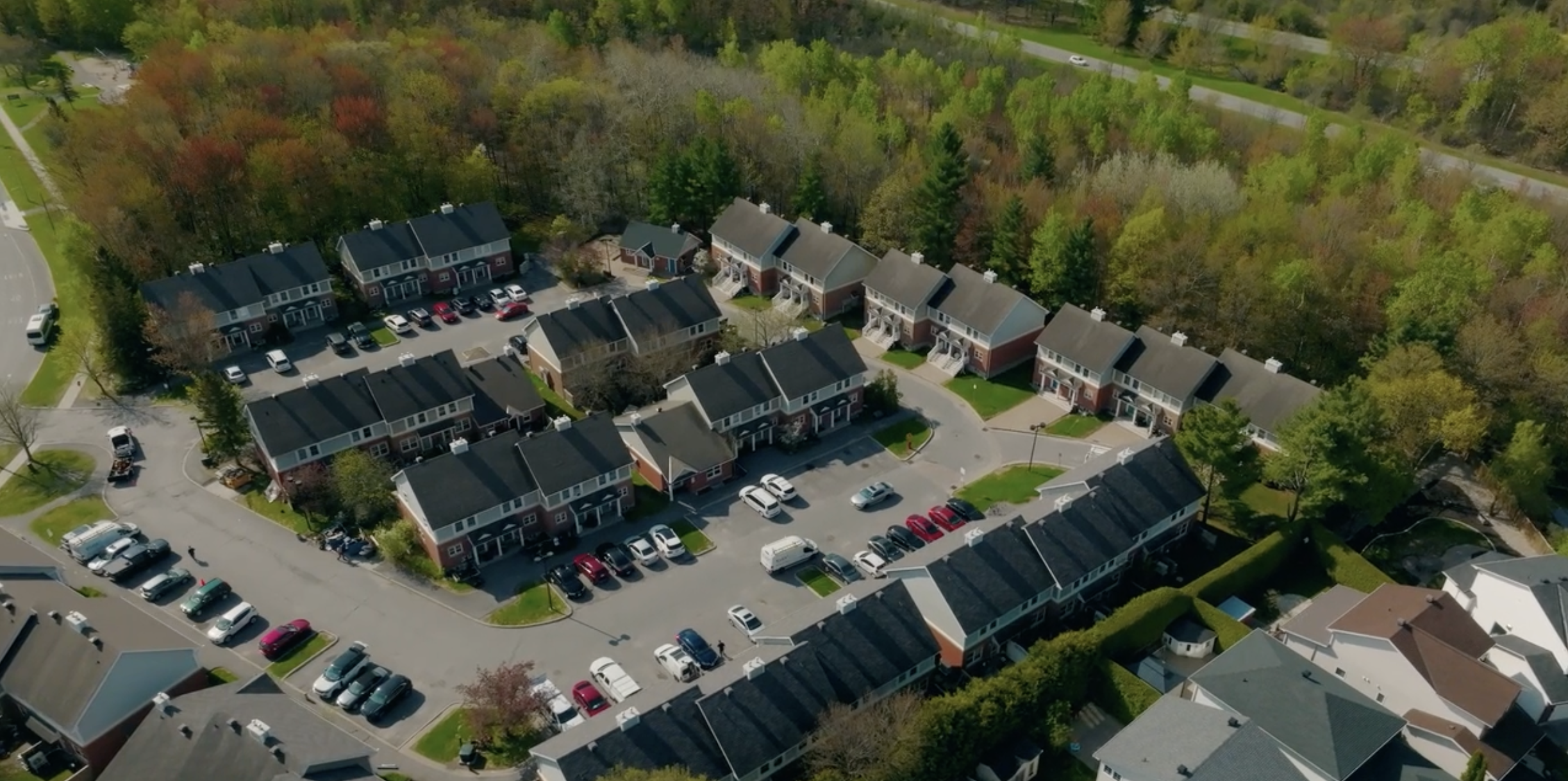

Melanie Johnston didn’t go to the Retrofit Canada conference in 2023 looking for a research partner; she went looking for a better way to keep people warm.
At the time, Johnston was director of home energy programs at EnviroCentre — and the problem she was trying to solve was far from abstract.
Across eastern Ontario, more than 33,800 social housing units face aging infrastructure and rising energy costs, with residents who cannot always afford to keep warm. She returned from Montreal with something she hadn’t anticipated: a research partner who would help her ask an entirely different set of questions about what a deep retrofit could actually achieve.
That partner was Dr. Mylène Riva, Canada Research Chair in Housing, Community, and Health in the Department of Geography at McGill University. Together, Riva and EnviroCentre became two of the three founding partners of what would grow into a multi-year, community-wide retrofit research initiative at the Carver Place social housing community in Ottawa.

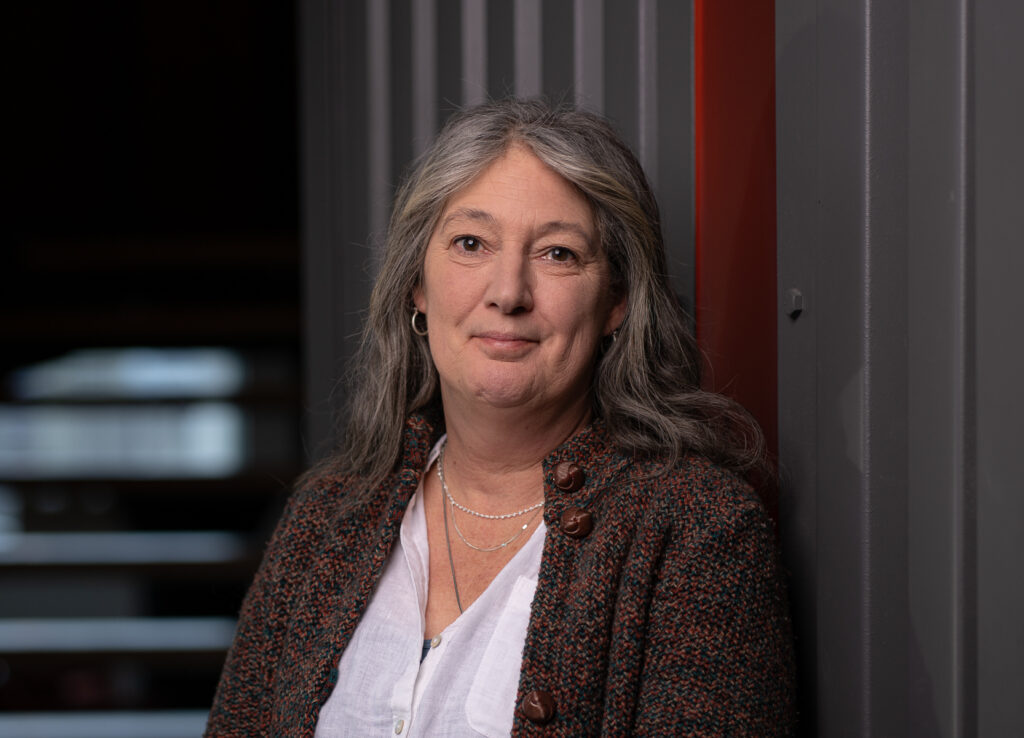
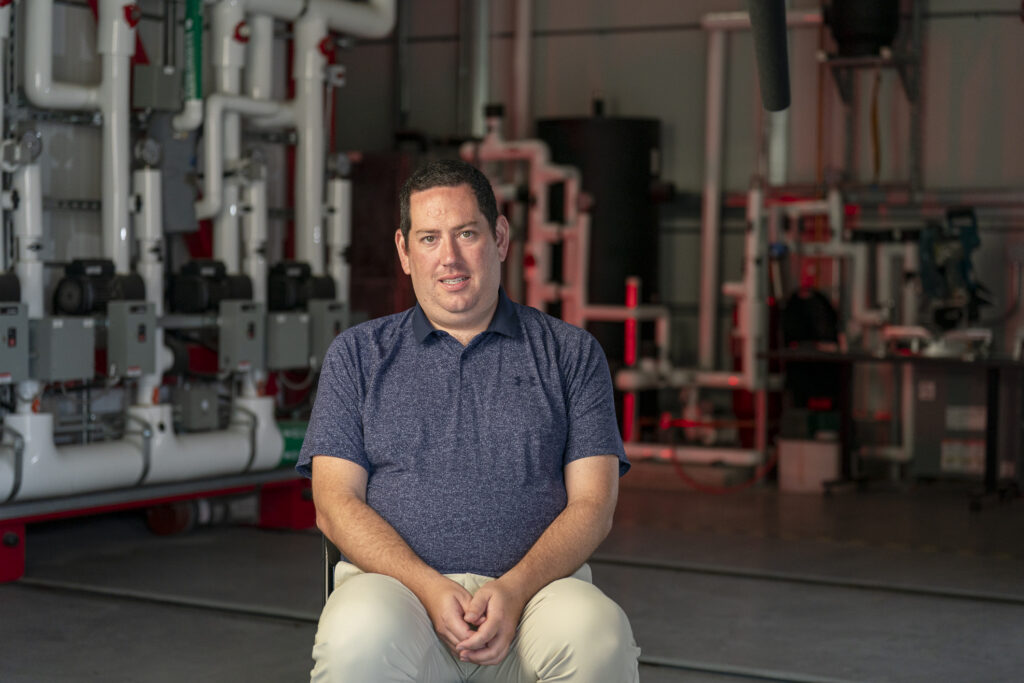
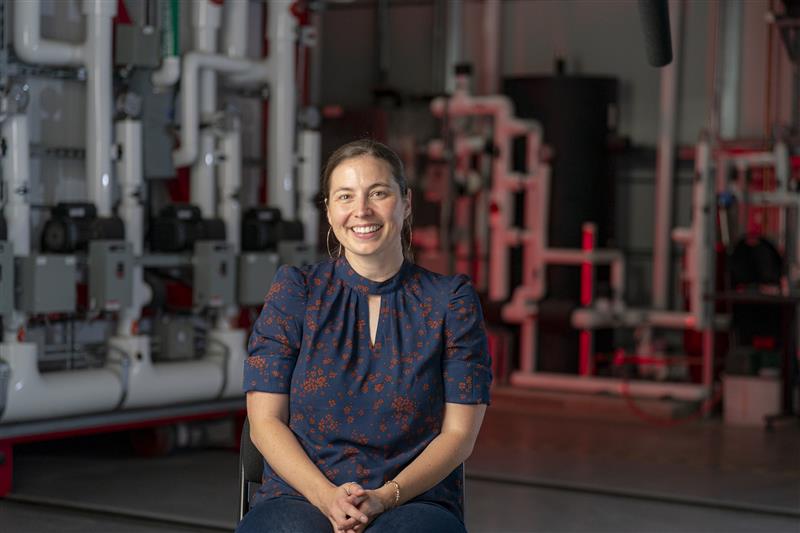
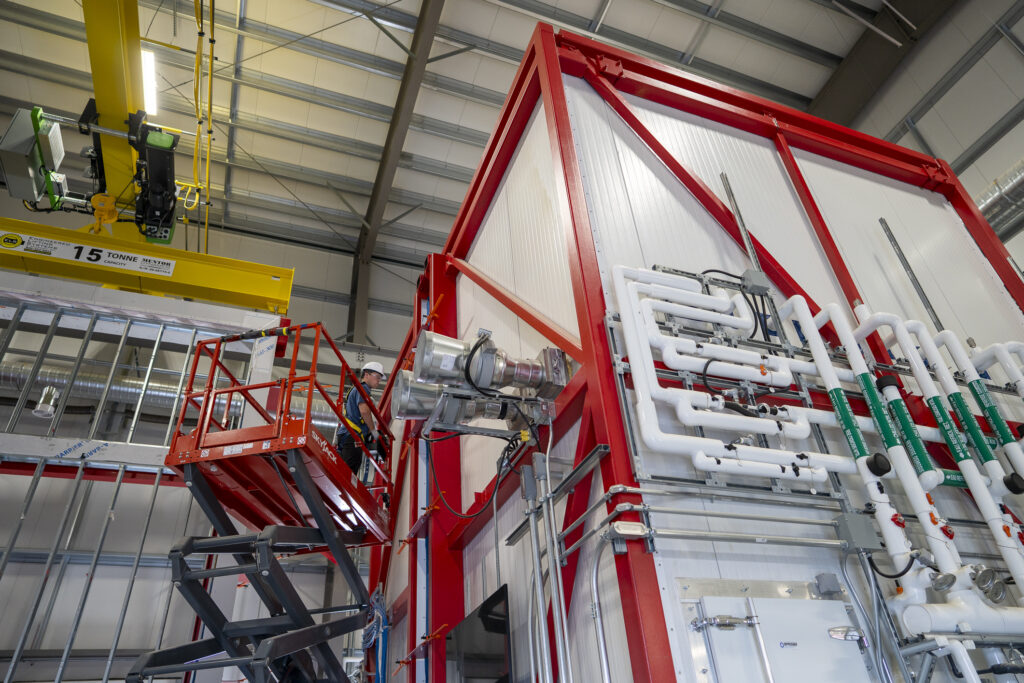
The third partner is Carleton University’s Centre for Advanced Building Envelope Research (CABER) program, led by Drs. Cynthia Cruickshank and Christopher Baldwin, in collaboration with Natural Resources Canada (NRCan). Cruickshank is associate dean in the Faculty of Engineering and Design at Carleton University; Baldwin serves as the CABER program manager. Their work at NRCan’s CanmetEnergy facility — located between Bells Corners and Kanata in Ottawa — focuses on studying, testing and researching building envelope materials and construction methods that reduce excess energy use and air loss from built structures.
Together, these three partners are asking a question that goes beyond energy savings: what does a deep retrofit actually do for the people living inside the homes?
Non-energy benefits and why they matter
Riva specializes in health geography – a field that examines the relationship between people and the places where they live and how that relationship shapes their health and well-being. Her research intersects with the study of energy poverty: how does living in an inadequately heated or cooled home affect a person’s health, and what does that experience actually feel like day-to-day?
The income threshold Canada uses to define energy poverty — households spending 10 per cent or more of their monthly income on energy costs — was established by research conducted in the United Kingdom in the 1990s. The practical reality it describes is a difficult and deeply personal one: how warm can you afford to keep your home while still covering rent, groceries and other essentials?
For more on that question, watch Part 1 of this series Heating or Eating, the origin of the EnviroCentre Retrofit Accelerator
How many Canadians must make the choice between eating and heating in Canada? We don’t know. What research tells us clearly is that housing and where you live are social determinants of health.
What does a deep retrofit process look like?
A deep energy retrofit starts with energy audits to assess how a given home uses and loses energy — through air leaks, insulation gaps, or inefficient mechanical systems, or some combination of all three. The goal is to identify where improvements will drive the greatest energy savings and the meaningful gains in comfort. That means addressing both how energy escapes the home and how the systems that consume energy. This includes heating/cooling, hot water, ventilation and plug loads.
Two questions sit at the heart of retrofit planning. Will installing a heat pump make your home more comfortable if a significant portion of your heating and cooling escapes through leaks and drafts?
Will upgrading your mechanical heating and cooling systems result in lower utility bills if the house is leaking air through the windows, walls and ceilings? Deep retrofits are based on the principle that a home’s systems — its walls, insulation, windows, and mechanical equipment — work together. Upgrading one without addressing the others limits what is possible.
The most effective retrofit plan is shaped by audit results, budget, and project goals. EnviroCentre’s team has extensive experience developing and refining that approach. Here is what the process looks like in practice.
Assess building archetype: in simple terms, within the scope of EnviroCentre’s expertise, there are certain types of buildings where retrofit work can happen, and some that can’t. Large multi-unit residential buildings present completely different mechanical (heating and cooling systems, such as central air) and exterior envelope considerations than those of a single-family home or duplex.
Test and audit: EnviroCentre’s energy audit staff bring decades of experience measuring heat loss and energy use. This data helps establish a baseline for determining the scope of work plans.
Did you know? Blower door tests — a Canadian innovation developed by Harold Orr and colleagues at the National Research Council — measure how airtight a building is. In simple terms, the test estimates how many times per hour the entire heated or cooled volume of air in a home escapes to the outside. That data helps designers and contractors pinpoint where air is leaking, reduce energy waste and improve year-round comfort.
Develop work plans and financing options: EnviroCentre uses audit data, previously planned upgrades, and budget constraints to develop retrofit options — improving insulation, reducing air leakage, and upgrading heating, cooling, or ventilation systems to cut energy use and costs.
Implement the work plans: EnviroCentre manages the project from start to finish, with industry partners carrying out the work.
Post-retrofit audit: Once the upgrades are complete, a post-retrofit audit repeats the same tests to confirm improvements. Comparing before-and-after data shows the impact of the work and helps refine best practices for future retrofits.
It is this full cycle — from baseline audit through to post-retrofit measurement — that makes the Carver Place research possible. The data collected at every stage gives the research teams at McGill and Carleton the foundation they need to study not just energy performance, but human experience.
What the research at Carver Place is examining
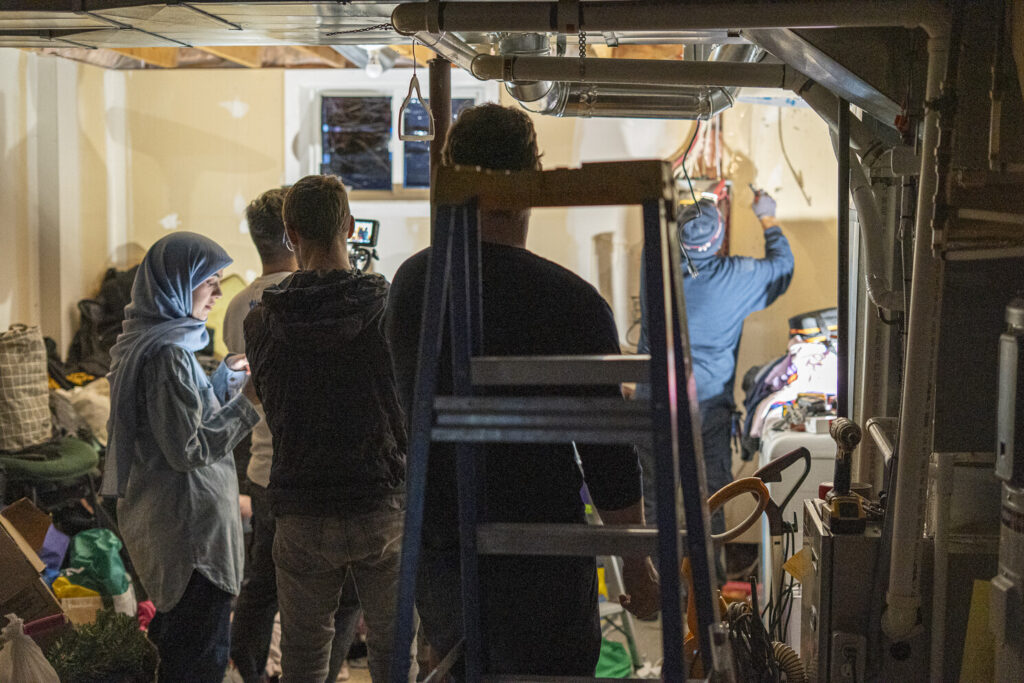
The Carver Place research has two complementary streams running in parallel. Together, the two streams will produce a picture of what health and wellbeing impacts a neighbourhood-scale deep retrofit delivers for the people who live through it.
PhD student, Bavisha Thurairajah, under the direction of Riva at McGill University, has been collaborating with the Multifaith Housing Initiative outreach team and EnviroCentre outreach lead Nicole Odhiambo to engage directly with Carver Place residents. Through interviews conducted between the summer of 2025and the summer of 2026, Thurairajah is documenting the lived experience of tenants before and after the retrofit– tracking changes in comfort, health and stress under the STAR framework: Sociotechnical Assessment of Retrofits.


Are residents warmer? Are they getting sick less often? Has the anxiety of living in a poorly heated home lessened? These are the questions that energy models do not answer.
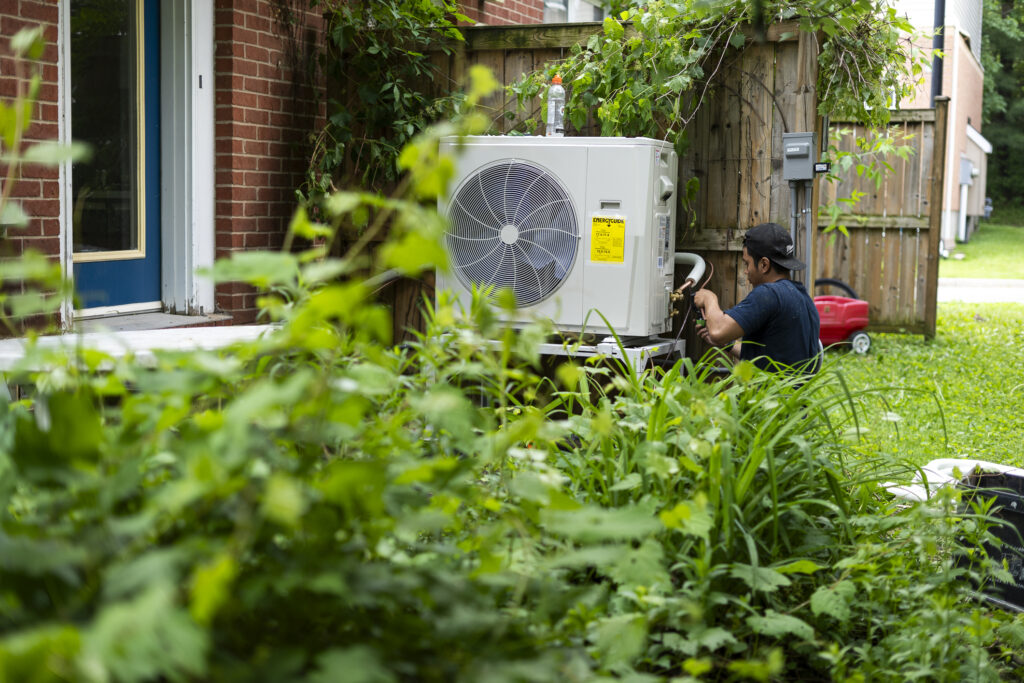
Alongside that qualitative work, PhD students with Carleton University’s CABER program have installed technical monitoring equipment in participating homes. Over a full year, sensors capture four variables: temperature, CO2 levels, relative humidity, and electricity consumption from newly installed mechanical equipment — heat pumps, high-efficiency furnaces, and heat pump water heaters.
A problem bigger than furnaces
The scale of work required to future-proof Canada’s existing housing stock can feel daunting. The energy audits, the testing, the careful sequencing of upgrades – it’s easy for the technical scope to overshadow something more fundamental: these are people’s homes. Whether social housing or a privately owned single-family house, they are places where families are made, and memories are created and displayed on walls and cabinet shelves.
Many of us live alongside neighbours who do not share the same equity, dignity and comfort that we take for granted. That comfort matters. The non-energy benefits that come from a deep retrofit – warmth, cleaner air, lower stress, better health – matter to families and the communities they live in.
Whether it was luck or serendipity that brought Johnston and Riva together in Montreal, that encounter reinforced something central to how EnviroCentre works: people in the communities where we live and work are central to what we do. The partnerships, expertise, and relationships that have grown from that conversation are helping to inform the deep retrofit work being done today and in the future. Projects like Carver Place have real-world outcomes; they can inform changes to building codes and standards across the country, and we are grateful for the dedication and expertise of our staff and the partners who advance this important work alongside us.
Full research findings will be available in 2026. Stay tuned for Part 3 of this series.
Interested in what a community-scale retrofit could look like for your portfolio?
EnviroCentre gratefully acknowledges the contributions of those who made this project possible
Primary funding: Natural Resources Canada
Carver Place Community: Multifaith Housing Initiative
Research and data collection: McGill University; Carleton University CABER Program