
Early lessons from Ottawa’s School Streets pilot
A few weeks ago, we celebrated the launch of Ottawa’s first official School Street pilot at Trille des Bois Public Elementary School in Vanier.
Since then, families, students and school staff have started to experience what happens when streets are designed for people instead of vehicles.
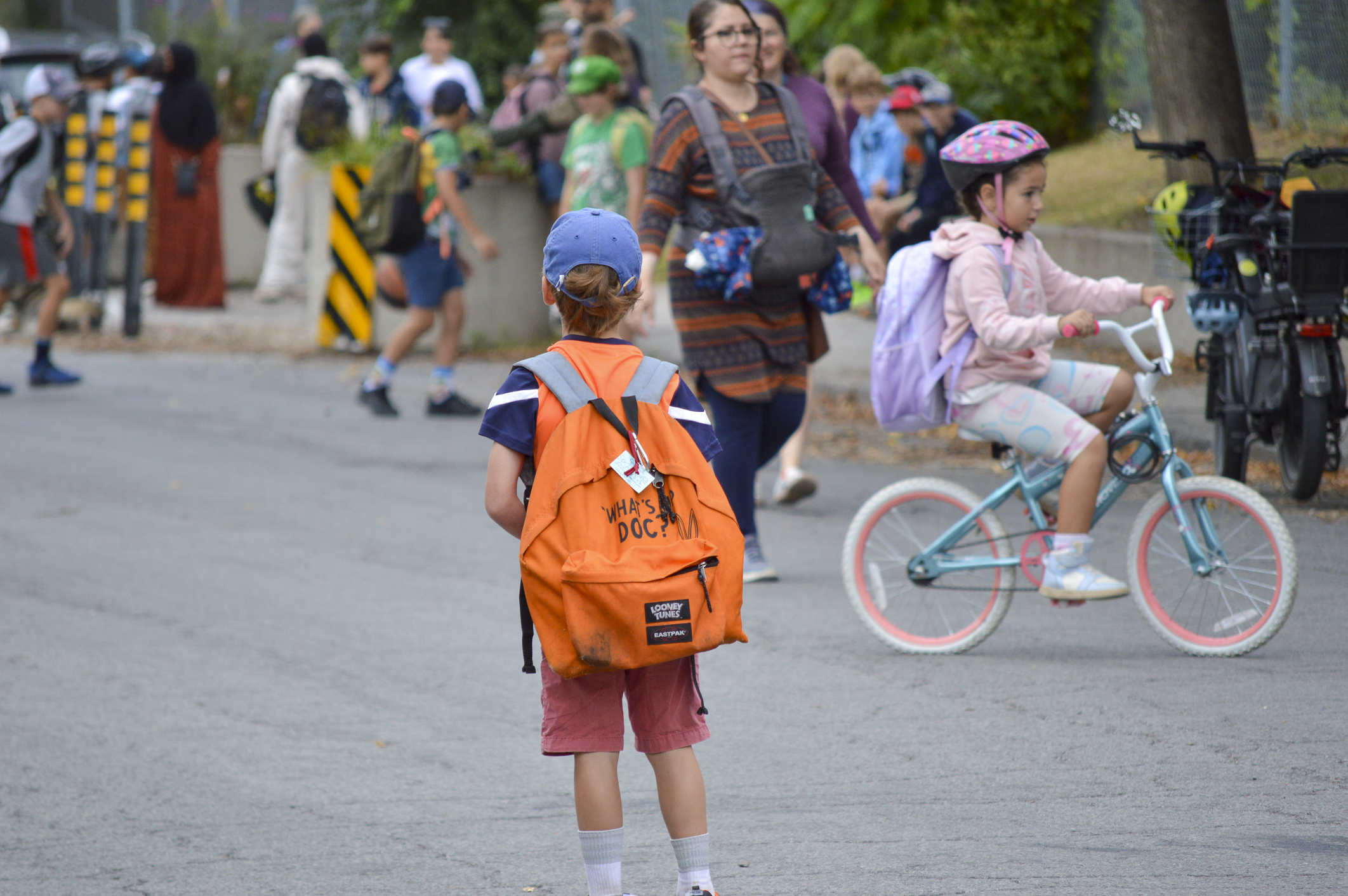
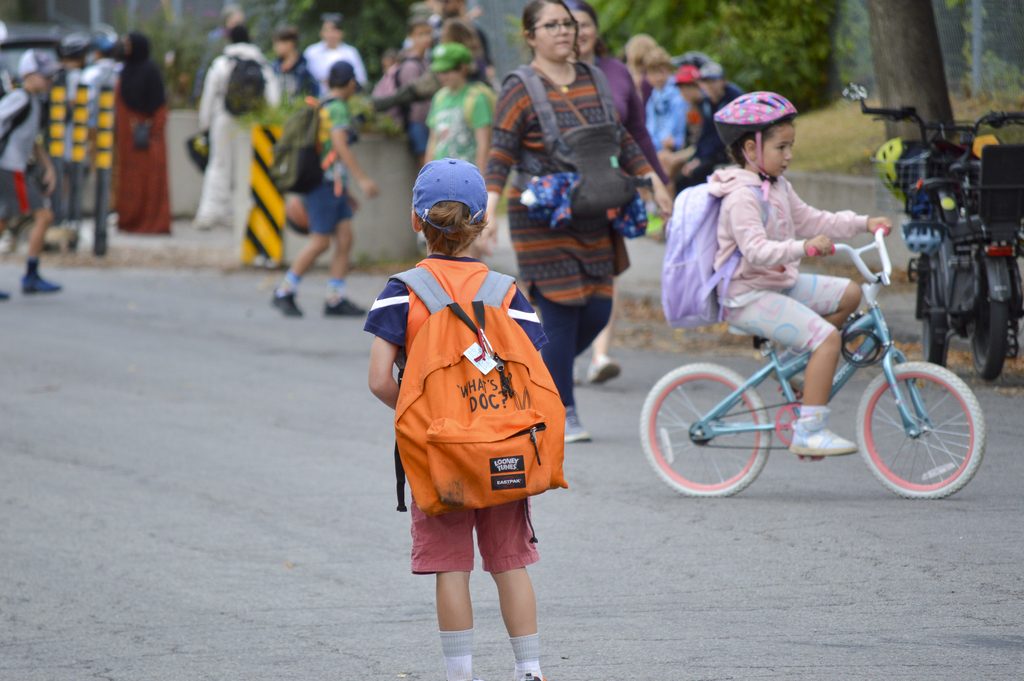
Twice a week, for just 20 minutes each morning, Alice Street becomes a community space where children can walk, bike, scooter, and socialize on their way to school, without the stress of navigating moving vehicles.
While improving safety has always been the primary goal, families are already noticing benefits beyond traffic.
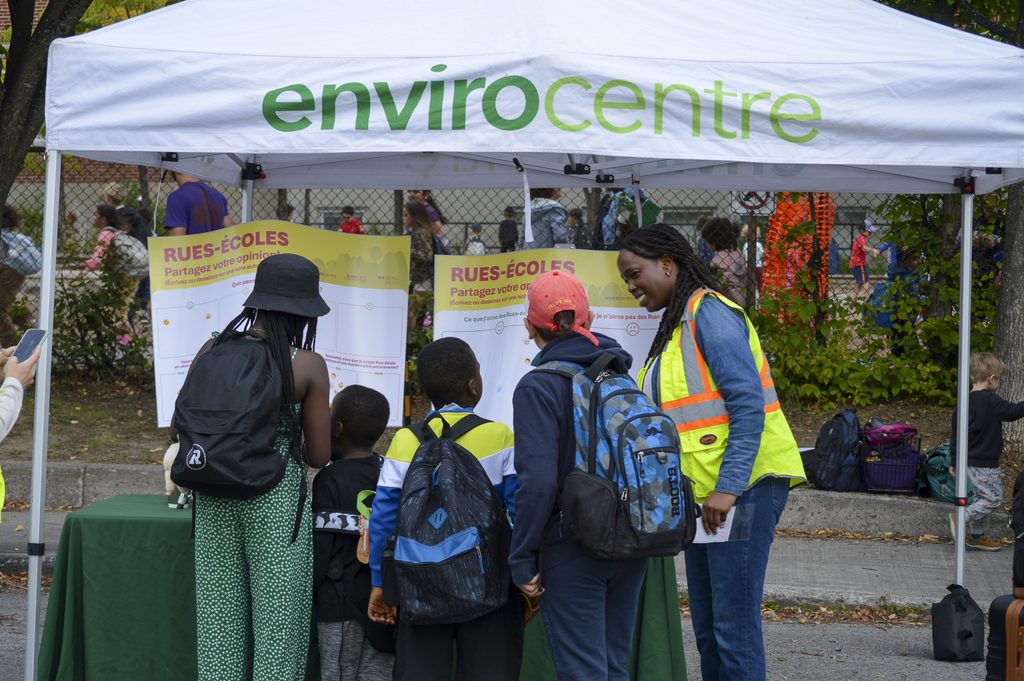
Creating space for connection
For parent advocate Michelle Morra, who helped champion School Streets at Trille des Bois, the change is about more than transportation.
“It’s helping change people’s habits. Everyone slows down in the morning,” says Morra.
She has also seen the impact on student well-being.
“Kids today carry a lot of anxiety. Having my daughter spend time outside the school with her friends, making art and connecting before going into her school day, has been really meaningful.”
The trip to school is no longer just about getting from point A to point B. It’s a chance to spend time outdoors, connect with friends and start the day on a positive note.
A safer environment for students and families
School staff are seeing the benefits too. Trille de Bois Principal, Rabah Iddir, says they extend beyond the morning commute.
“We’re very proud to be part of this initiative. Safety is very important. School Streets help address concerns around traffic and idling while encouraging active transportation. This has a positive impact on students, families, the school and the broader community.”
The pilot aims to reduce traffic conflicts at drop-off and make it easier for families to walk, roll and bike to school. For many, the difference is immediate.
“Mornings on Alice Street always felt chaotic as a pedestrian and cyclist,” says Morra. “Now, with School Streets, an entire layer of stress has been removed. The day begins with a much calmer energy.”
Community leadership made it possible
The Trille des Bois School Street did not happen overnight. In fact, local families and volunteers first demonstrated its potential through an earlier grassroots pilot.
At the launch event this September, Green Communities Canada Communications Manager Leif Einarson recognized that leadership.
“Special thanks to the volunteer advocates, especially Michelle Morra, who, with Councillor Stéphanie Plante’s help, organized their own School Street here two years ago.”
Councillor Stéphanie Plante, who helped champion School Streets in Ottawa, says the project reflects years of community effort.
“This project is especially close to my heart. I launched the original pilot in 2024 and advanced the motion that made this relaunch possible. Most kids in Ward 12 walk to school, and now, for 20 minutes twice a week, Alice Street becomes a welcoming space where children can walk to school safely.”
The current pilot builds on that foundation and introduces Ottawa’s new official School Streets process, creating a model that could be replicated at schools across the city.
Einarson also acknowledged the partnerships required to move an idea from community aspiration to reality.
“Today is a demonstration that transformational change can begin with a joyous celebration.”
Part of a growing national movement
The Trille des Bois pilot is one of many School Streets being supported through the National Active School Streets Initiative, led by Green Communities Canada and funded through the Public Health Agency of Canada’s Healthy Canadians and Communities Fund.
The initiative is investing in safer, healthier routes to school and helping communities across Canada create spaces that support active transportation, physical activity and children’s well-being. The goal is simple: make it easier and safer for more children to walk, bike and roll to school.
Eleven School Streets were implemented across Canada during the 2025-2026 school year, with up to 20 more planned during 2026-2027. Researchers from four Canadian universities are also studying the impacts of School Streets, building evidence that can support future projects across the country.
Building momentum
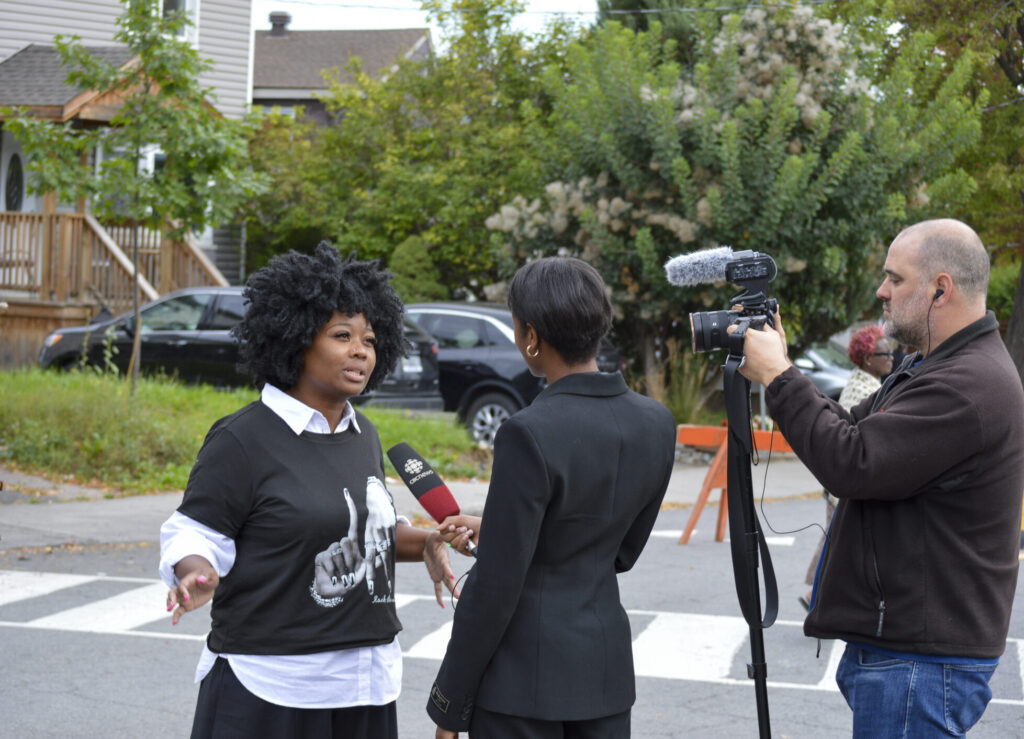
The pilot has also attracted significant local media attention, helping spark conversations about how streets can better serve children, families and communities.
Recent coverage includes:
- CTV News: Road closed to cars in front of Vanier school as part of ‘school streets’ project
- CBC Ottawa Morning: Street in front of Vanier school closes to traffic two mornings a week
- Radio-Canada Ohdio: Premier couloir scolaire sans voitures à Ottawa
- CBC News: Elementary school in Vanier closes street to cars during morning drop off
You can explore the full collection of coverage in our Media Centre.
Looking ahead
The Trille des Bois pilot is only the beginning.
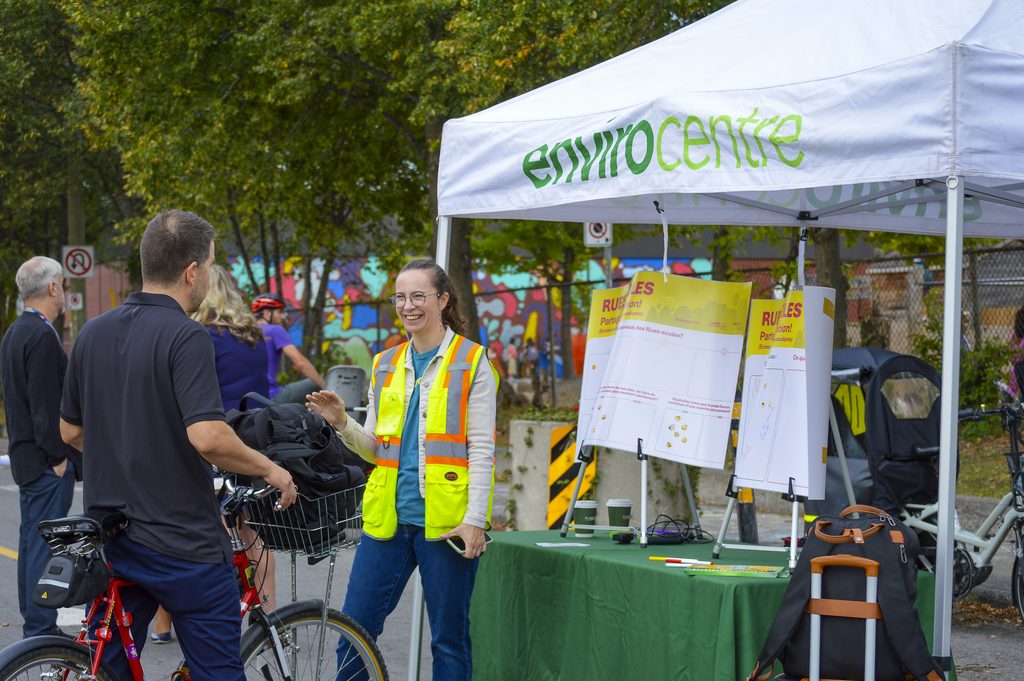
This fall, EnviroCentre is working with schools, families, volunteers and community partners to test and evaluate School Streets in Ottawa. A second pilot is underway at Hopewell Avenue Public School, where the street closes three days a week during morning drop-off and afternoon pick-up.
These pilots will help us understand how School Streets can improve safety, support active transportation, reduce idling around schools and create more welcoming public spaces.
Throughout the pilot period, EnviroCentre is gathering feedback from students, families, school staff, residents and volunteers. We are also collecting data on travel behaviour and road safety to better understand the impacts and opportunities for future School Streets in Ottawa.
The results will inform future decisions, but one lesson is already clear: when communities create space for children to walk, roll and connect, the benefits reach far beyond the school gate.